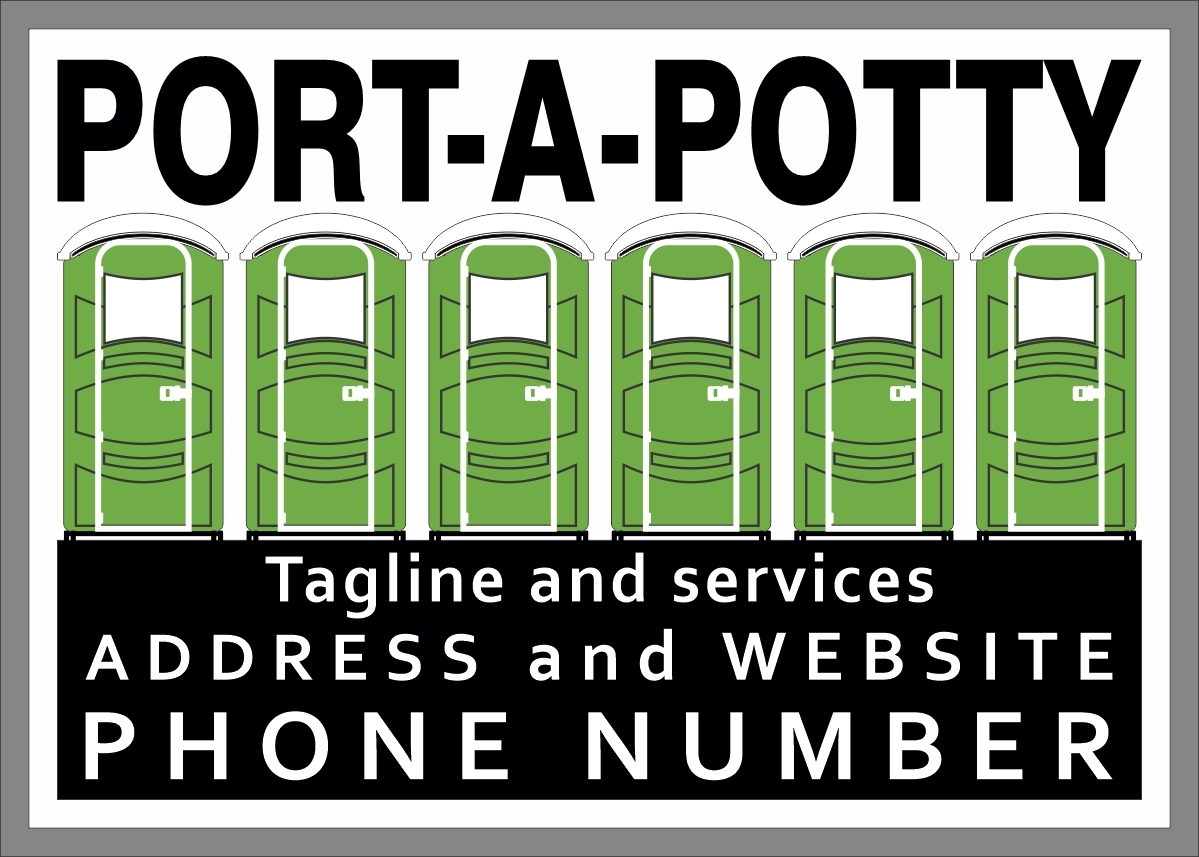
Vinyl Decals for Textured Plastic: A Portable Restroom Case Study
At KSP Prints, our standard plastic-surface vinyl has a long track record. Its high-tack adhesive performs exceptionally well in many applications, and many of our customers use it on the sides of portable restrooms, including textured panels, without issue.
Occasionally, though, a unique application comes along that calls for something more specialized. Recently, a portable restroom operator presented us with one.
The Challenge: A Unique Portable Restroom Decal Application
The customer needed large decals applied to the side panels of their portable restrooms. We expected our standard high-tack vinyl to perform well, as it does for many of our customers. In testing, the decal bonded strongly to the restroom door, but results on these particular side panels were less successful.
The difference came down to surface texture.
Not All Plastic Surfaces Are the Same
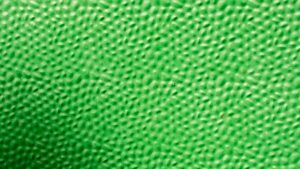
Although the entire restroom was plastic, the side panels had a heavily textured, molded surface, while the door was comparatively smooth.
When Standard Vinyl Struggles on Textured Plastic
A conventional high-tack adhesive can bond well to smooth plastic and to many textured surfaces. On a heavily textured surface, though, the adhesive has to bridge countless peaks and valleys in the molded plastic instead of sitting flat against the substrate. That means less contact area and can reduce long-term performance.
Adhesive Contact Is Everything
Adhesive is essentially glue: gummy, and made to bond to surfaces. But a thin layer, even an advanced high-tack adhesive, takes the path of least resistance. With enough time and tools, it can be forced into the dips and rises of a textured surface, but that isn’t practical in the field. To bond, the adhesive has to actually touch the surface, not just span the gaps and make minimal contact.
The Solution: Thick-Adhesive Vinyl for Rough, Molded Plastic
Our standard product handles most applications, including many textured ones. When we run into a unique problem like this one, we turn to our industry partners for specialty adhesives. In this case, that meant a vinyl designed for especially difficult plastic surfaces, with an adhesive layer approximately twice as thick as our standard plastic-surface vinyl.
That extra thickness lets the adhesive flow deeper into surface irregularities and contours, increasing adhesive-to-surface contact. The result is improved bonding on rough, textured, and molded plastic where standard materials may struggle.
Best Applications for Thick-Adhesive Vinyl on Textured Plastic
This material is an excellent choice for:
- Portable restroom decals and graphics
- Waste and recycling container labels
- Rotationally molded plastic products
- Textured plastic equipment
- Outdoor service equipment
- Rugged industrial applications
How to Choose the Right Decal Material
One of the most common misconceptions in the decal industry is that all plastics behave the same way. In reality, texture, surface energy, exposure conditions, and the application environment all determine which material will perform best.
That’s why we work with customers to understand the actual application before recommending a product. Sometimes the difference between a successful decal and a failed one comes down to choosing the right adhesive.
Need Decals for Textured or Difficult Plastic Surfaces?
If your decals need to adhere to textured plastic, molded surfaces, portable restrooms, or other challenging substrates, we’d be happy to help you identify the right material for the job.
Learn more about our custom stickers and decals

 To answer this question, we need to go back to our roots. In 1961, Harold and Josephine Hyatt opened Kewanna Safety Products in their barn to meet the need for Slow Moving Vehicle signs as well as flags for farm equipment and Amish buggies. They even made safety vests for construction workers. Early on, KSP made its mark in producing quality products, which still holds true some 50 years later. A few years into operation, KSP was asked to make wide-bodied banners for trailers and printing soon became the dominant product of the company. The company didn’t change its name to Kewanna Screen Printing until 1986.

 For over fifty years,